
August 06, 2026
Larch has quietly become one of the most sensible choices in UK timber cladding — not the flashiest option on the market, but arguably the one that makes the most practical sense for anyone weighing up cost, durability and appearance without wanting to commit to a factory-painted finish. Here's what's actually worth knowing before you buy.
What makes Larch different
Larch is a naturally durable softwood — one of the few softwood species that holds up to exterior use without chemical treatment, thanks to a high resin content that gives it natural resistance to rot and insect attack. That puts it in a different category from most cladding-grade softwoods, which typically need pressure treatment or a protective coating to perform outdoors long-term.
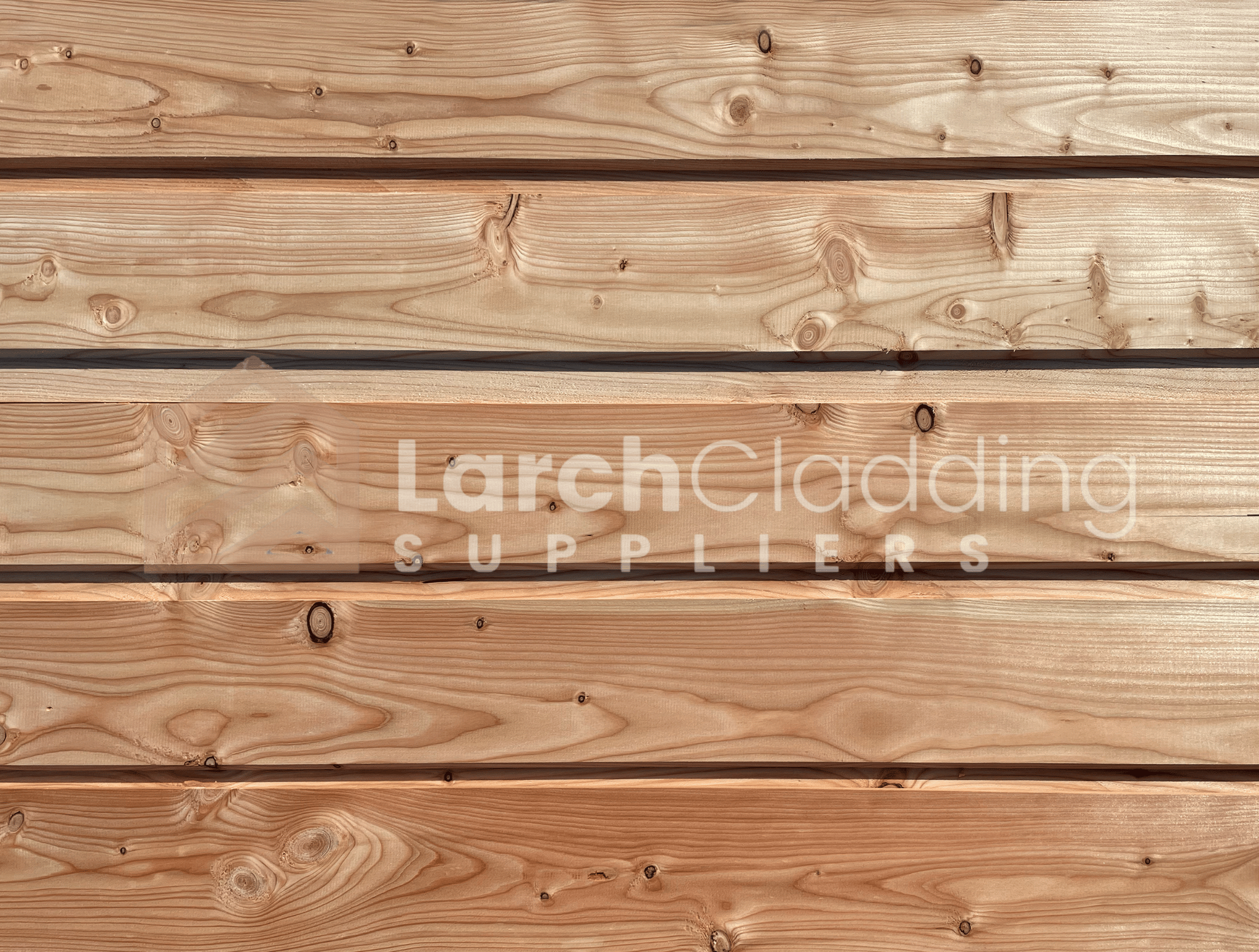
Left unfinished, Larch weathers to an attractive silver-grey over time, similar to Cedar, though its natural colour when freshly milled is a warmer honey-gold. Whether you let it weather naturally or maintain the original colour with an oil or stain is entirely down to preference — both are legitimate, low-maintenance approaches, they just give a different end look.
European Larch specifically
Not all Larch is equal, and it's worth knowing what you're buying. European Larch — sourced from managed forests across the continent — is the standard for UK cladding supply and what's stocked here. It's PEFC and FSC certified, meaning it comes from forests managed to recognised sustainability standards, which matters both for the environment and increasingly for planning requirements on newer builds.
You may also come across "Siberian Larch" referenced elsewhere in the market. Sourcing from Russia has been significantly disrupted in recent years, so it's worth checking exactly what species and origin you're being sold, rather than assuming the name on a product listing reflects current stock.
Most of what's stocked here is European Larch, and everything specific to species — durability, colour, certification — in this guide refers to European Larch unless stated otherwise. We also now stock a small range in Canadian Larch, a closely related species with similar durability characteristics but a slightly different grain and colour profile. If you're specifying a project where consistency across boards matters (a single continuous facade, for example), it's worth confirming which species a specific product is before ordering, since the two shouldn't be mixed within the same run of boards. Product listings state the species clearly — check this alongside the profile and dimensions before adding to your order.
Profiles and finish
Larch cladding is typically supplied in a channel groove profile for a clean, modern vertical or horizontal fit, though PAR (planed all round) boards are also widely available for fencing and more general exterior joinery use.
Because Larch doesn't need a factory-applied coating to perform, you get more flexibility than with a pre-finished product: leave it to weather naturally, apply a UV-stable oil to maintain the golden tone, or use a stain if you want a different colour altogether. None of these choices affect the timber's underlying durability — they're purely aesthetic.
Fixing and detailing
The fundamentals are the same as any timber cladding: batten the wall to create a ventilated cavity behind the boards, and use stainless steel fixings rather than standard galvanised ones. Larch's resin content makes it slightly more prone to staining around fixings if the wrong fastener is used, so this is one species where cutting corners on fixings shows up faster than most.
Cost
Larch sits toward the more affordable end of naturally durable cladding species — a genuinely useful middle ground between the cheapest treated softwoods (which need more ongoing maintenance) and premium hardwoods like Cedar or Oak (which cost considerably more per m²). For a lot of projects, it's the best balance of upfront cost, durability, and long-term maintenance burden available in UK timber cladding.
Is Larch right for your project
Larch works particularly well where you want a natural, warm timber look without the coating maintenance schedule of a painted finish, and where budget matters but you still want genuine durability rather than a treated softwood that needs replacing in a decade. If you specifically want a jet-black, uniform, factory-finished look, it's not the right choice — that's a different product category entirely. But for a natural or lightly-maintained timber facade or fence, it's hard to beat on value.
If you're specifying for a project and want help working out coverage, profile choice or fixing detail, our team can talk you through the numbers before you order.

General